National Living Wage 2026 Annual Salary: What £12.71 Pays
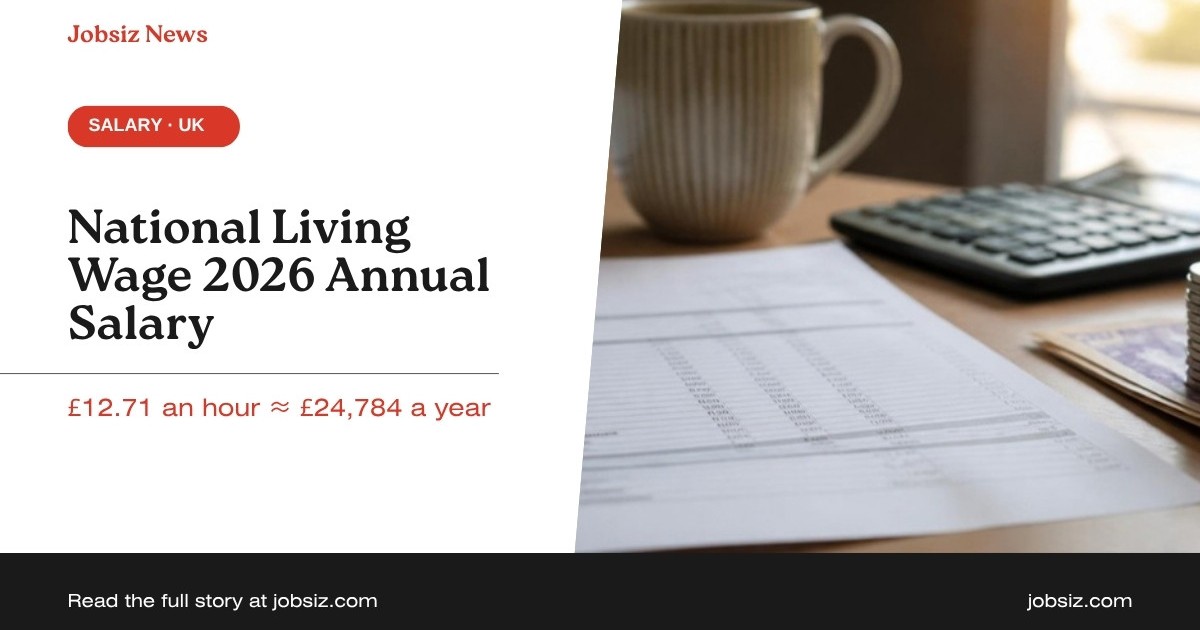
Quick answer: The National Living Wage is £12.71 an hour from 1 April 2026 for workers aged 21 and over. On a 37.5-hour week over 52 weeks, that equals about £24,784.50 a year before tax and National Insurance. A 40-hour week gives about £26,436.80, and a 35-hour week about £23,132.20.
Key takeaways
The National Living Wage rose from £12.21 to £12.71 an hour on 1 April 2026 for workers aged 21 and over.
A full-time worker on 37.5 hours a week earns roughly £24,784.50 a year at the legal minimum, before deductions.
Workers aged 18 to 20 are entitled to £10.85 an hour, while under-18s, apprentices under 19 and first-year apprentices get £8.
There is no separate legal minimum for Scotland, Wales, Northern Ireland or London; the higher real Living Wage is voluntary.
Tips, overtime premiums and salary sacrifice do not count towards the minimum, so check your payslip carefully.
Last updated: 8 October 2026
Working out your National Living Wage 2026 annual salary is simple once you know three things: the hourly rate, your weekly hours and how many weeks you are paid for. From 1 April 2026 the legal minimum for anyone aged 21 or over is £12.71 an hour, according to GOV.UK. Below, we turn that hourly figure into yearly, monthly and weekly pay for the most common working patterns, explain who gets a lower rate, and show what does and does not count when you check your own wages.
What is the National Living Wage 2026 annual salary?
For a typical 37.5-hour week, the National Living Wage 2026 annual salary is about £24,784.50 before tax. That figure assumes you are paid for all 52 weeks of the year, including paid holiday.
The sum is £12.71 × 37.5 hours × 52 weeks. Employers often quote full-time hours differently, so it helps to see the range. All figures below are gross (before Income Tax, National Insurance and pension contributions) and are Jobsiz calculations based on the official hourly rate:
40 hours a week: about £26,436.80 a year, or £508.40 a week
37.5 hours a week: about £24,784.50 a year, roughly £2,065.38 a month or £476.63 a week
35 hours a week: about £23,132.20 a year, or £444.85 a week
30 hours a week: about £19,827.60 a year, or £381.30 a week
20 hours a week: about £13,218.40 a year, or £254.20 a week
16 hours a week: about £10,574.72 a year, or £203.36 a week
To check your own figure, multiply £12.71 by your contracted weekly hours, then by 52. Divide the result by 12 for a rough monthly amount.
How much did the National Living Wage go up in April 2026?
The hourly rate went up by 50p, from £12.21 to £12.71, which is a rise of roughly 4.1%. GOV.UK lists the £12.21 rate as applying from April 2025 to March 2026.
In yearly terms, someone on 37.5 hours a week gained about £975 before tax, moving from roughly £23,809.50 to £24,784.50. Younger workers saw larger percentage increases: the 18 to 20 rate climbed from £10 to £10.85, and the under-18 and apprentice rate moved from £7.55 to £8.
One detail catches many people out. According to the Advisory, Conciliation and Arbitration Service (Acas), a new rate starts from the next "pay reference period" after the increase, so a monthly-paid worker whose pay period runs from the 16th to the 15th would not see the full uplift until the period starting 16 April.
What are the 2026 minimum wage rates by age?
The rate you are owed depends on your age and whether you are an apprentice. Here are the hourly figures that apply from 1 April 2026, with the full-time yearly equivalent at 37.5 hours a week:
Aged 21 and over (National Living Wage): £12.71 an hour, about £24,784.50 a year
Aged 18 to 20: £10.85 an hour, about £21,157.50 a year
Under 18: £8 an hour, about £15,600 a year
Apprentice rate: £8 an hour, about £15,600 a year
The apprentice rate applies to apprentices under 19, and to those aged 19 or over who are in the first year of their apprenticeship. Once an apprentice is 19 or older and has finished that first year, they move to the normal rate for their age. GOV.UK gives the example of a 21-year-old who has completed year one being entitled to £12.71 an hour.
Is the National Living Wage different in Scotland or London?
No. The legal minimum has no regional bands, so the £12.71 rate is the same whether you work in Glasgow, Cardiff, Belfast, Manchester or central London.
What does differ is the voluntary real Living Wage set by the Living Wage Foundation. Its current rates are £13.45 an hour across the UK and £14.80 in London. Employers accredited by the Foundation choose to pay these higher figures; they are not a legal requirement. At 37.5 hours a week over 52 weeks, those rates would equal about £26,227.50 and £28,860 a year respectively.
The Foundation says its 2026-27 rates will be announced on 15 October 2026, and accredited employers then have until 1 May 2027 to put them in place. If your employer is accredited, that announcement is worth watching.
What counts towards the minimum wage?
Your pay is checked on gross earnings, averaged over each pay period. Some payments help you reach the minimum, while others are ignored, according to Acas guidance.
These count:
basic pay
performance-related incentive pay
bonuses
commission
These do not count:
tips and gratuities
premium pay for overtime or working bank holidays
loans or pay advances from your employer
repaid expenses and redundancy pay
benefits in kind, such as meal vouchers
pay given up through salary sacrifice, for example for childcare vouchers or a company car
This matters for a salaried role. A job advertised at, say, £25,000 might look comfortably above the legal floor, but if long unpaid hours or salary sacrifice push your average hourly pay below £12.71, the employer may be underpaying you.
How to check you are paid the right amount
Start with your payslip and contract, then work out your average hourly rate. A short checklist:
Find your gross pay for one pay period, before tax and National Insurance.
Remove anything that does not count, such as tips or overtime premiums.
Divide by the hours you actually worked in that period.
Compare the result with the rate for your age band.
Use the National Minimum Wage and National Living Wage calculator on GOV.UK to confirm.
Acas suggests raising any shortfall informally first, then through a formal grievance. If that fails, you can complain to HM Revenue and Customs (HMRC), anonymously if you prefer, or make an employment tribunal claim, but not both for the same issue. Strict time limits apply to tribunal claims, so act promptly.
HMRC can order employers to repay arrears going back up to six years and can fine them up to £20,000 per worker affected, Acas says.
Common mistakes when working out yearly pay
The most frequent error is treating an annual figure as take-home pay. Every amount in this guide is gross, so Income Tax, National Insurance and any workplace pension contribution will reduce what reaches your bank account.
Using 52 weeks for zero-hours or term-time work: if you are only paid for part of the year, multiply by the weeks you are actually paid.
Forgetting your birthday: turning 18 or 21 moves you to a higher rate from the next pay period.
Counting tips: hospitality staff must reach the minimum before tips are added.
Assuming London pays more by law: only the voluntary real Living Wage has a London rate.
What this means for you
If you are 21 or over and work full time, anything below roughly £24,784.50 a year for 37.5 weekly hours deserves a closer look. Job seekers can use the hourly rate to compare offers fairly, especially where adverts list annual salaries with different hours. For a look ahead to next April, read our guide National Living Wage 2027 Forecast: What £13.18 Means. If you fall ill, Statutory Sick Pay 2026: Rates, Day-One Rules, Daily Pay explains your rights, and if you are hunting for seasonal shifts, see Christmas Jobs 2026 UK: Who's Hiring and What They Pay.
Frequently asked questions
What is £12.71 an hour annually in the UK?
At 37.5 hours a week for 52 weeks, £12.71 an hour comes to about £24,784.50 a year before tax. On 40 hours a week it is about £26,436.80. Both figures are gross, so tax, National Insurance and pension contributions come off.
What is the National Living Wage 2026 monthly?
On a 37.5-hour week, the National Living Wage works out at about £2,065.38 a month before deductions. That is the yearly figure of £24,784.50 divided by 12. Fewer hours mean proportionally less.
Who is entitled to the National Living Wage?
Workers aged 21 and over are entitled to the National Living Wage of £12.71 an hour from 1 April 2026. Younger workers receive the National Minimum Wage for their age band, and apprentices may receive the £8 apprentice rate.
Is the National Living Wage the same in Scotland?
Yes. The legal rate of £12.71 an hour has no regional variation, so it is the same in Scotland, England, Wales and Northern Ireland. Only the voluntary real Living Wage has a separate, higher London rate.
Is the real Living Wage the same as the National Living Wage?
No. The National Living Wage is the legal minimum set by the government. The real Living Wage, currently £13.45 an hour or £14.80 in London, is independently calculated, promoted by the Living Wage Foundation and paid voluntarily by accredited employers.
When will the National Living Wage change next?
Rates usually change on 1 April each year, according to GOV.UK and Acas. Separately, the Living Wage Foundation will announce its voluntary 2026-27 rates on 15 October 2026.
What can I do if I am paid below the minimum wage?
Raise it with your employer first, then use a formal grievance if needed. If it remains unresolved, you can complain to HMRC or make an employment tribunal claim, but you cannot use both routes for the same issue.
Sources
This article was compiled by Jobsiz from the sources listed above, with AI-assisted writing and automated fact-checking. Published 8 October 2026. We update stories when new verified information becomes available.