Botswana Livestock Census 2026: Jobs and Skills Guide
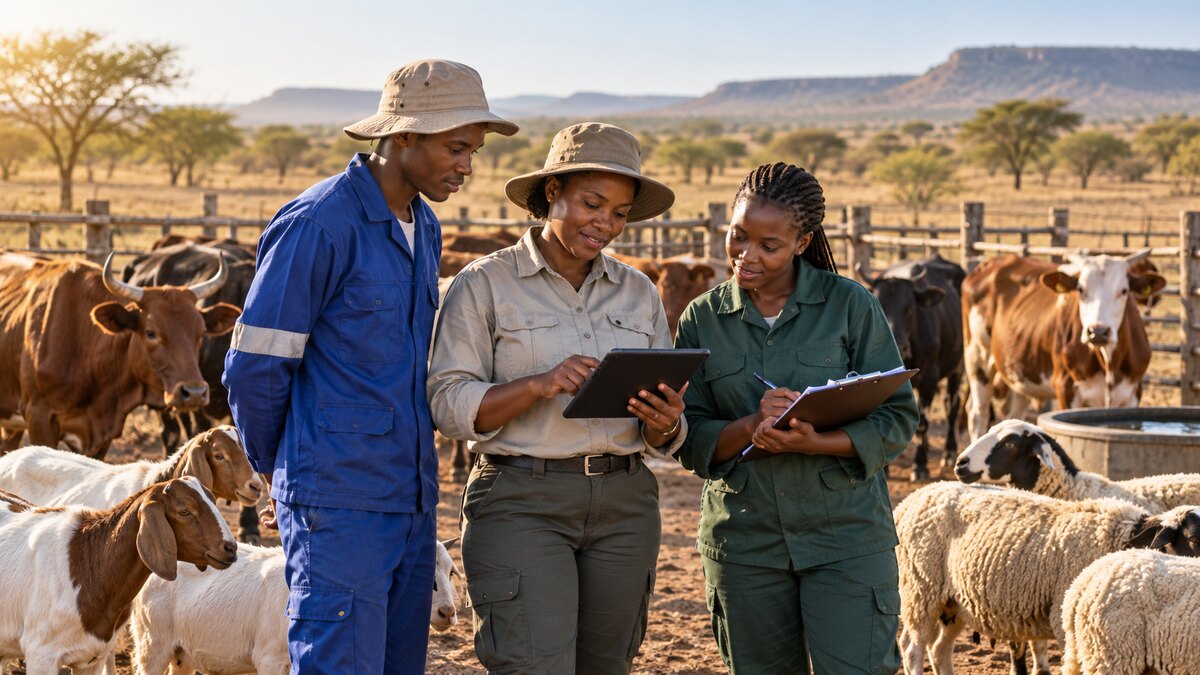
Botswana Livestock Census 2026: Jobs and Skills
Botswana’s provisional 2025 Agricultural Census shows the national cattle population fell 6.1% from 2015, while goat numbers rose 5.5% and sheep increased 33.3%. The figures do not announce vacancies, but they highlight changing demand for animal health, farm records, small-stock production, marketing and climate-resilient livestock skills.
Statistics Botswana released its livestock-sector census brief in September 2026. The report compares the 2025 Agricultural Census with the previous census conducted in 2015 and provides a new national baseline for livestock planning.
The findings matter beyond herd counts. Agriculture is identified as a priority sector under the Botswana Economic Transformation Programme, and livestock production supports work across farms, veterinary services, transport, feed supply, meat processing, data collection and rural enterprise.
The results are provisional and may be revised when Statistics Botswana publishes the full agricultural census report. They should therefore be used as an employment signal—not as proof that a particular company or government department is hiring.
What did Botswana’s livestock census find?
The Statistics Botswana brief recorded 1,638,543 cattle in 2025, down from 1,744,166 in 2015. That represents a 6.1% decline over the ten-year comparison period.
Small-stock populations moved in the opposite direction. Goats increased from 1,205,238 to 1,271,407, while sheep rose from 242,432 to 323,279.
Livestock type 2015 population 2025 population Change Cattle 1,744,166 1,638,543 -6.1% Goats 1,205,238 1,271,407 +5.5% Sheep 242,432 323,279 +33.3%
Statistics Botswana also reported that cattle births were 14.3% lower than in the 2015 census, while cattle deaths were 30.7% higher. Goat births increased 5.2%, but deaths rose 27.7%. Sheep births increased 35.7%, while sheep deaths increased 65.8%.
These figures describe population changes; the census does not isolate their causes. Statistics Botswana specifically cautions that the data cannot separately quantify the effects of drought, disease, slaughter, imports or exports. Jobseekers and employers should avoid presenting one factor as the confirmed explanation.
Where is Botswana’s livestock activity concentrated?
The census district tables recorded 36,788 cattle holdings nationwide. Mahalapye had the largest number of holdings at 3,244, followed by Kweneng with 3,001 and Letlhakeng with 2,935.
Letlhakeng recorded the largest cattle population among the listed districts at 134,395. Mahalapye followed with 108,244 and Kgatleng with 83,247. The national average was 45 cattle per holding.
Location matters when looking for Botswana livestock jobs. Farm-based roles are more likely to be advertised near production areas, while veterinary suppliers, processors, laboratories, regulators and agricultural finance employers may be concentrated in larger towns.
Candidates should search by both occupation and place. Someone seeking animal-health work, for example, can monitor district-level roles as well as positions with national organisations that require travel to farms.
What do the figures mean for Botswana livestock jobs in 2026?
The census is not a vacancy announcement, and population growth does not automatically produce jobs. It does reveal where livestock businesses and public services may need different skills.
Animal health and biosecurity
Higher recorded deaths across cattle, goats and sheep reinforce the importance of disease surveillance, vaccination, parasite management, herd-health records and safe animal handling. Relevant occupations can include veterinarians, veterinary assistants, animal-health technicians, laboratory staff and farm supervisors.
Professional roles may require registration, formal qualifications or government approval. Applicants should verify requirements with the employer and the relevant Botswana authority before paying for training.
Small-stock production
The increase in goats and sheep may support interest in small-stock husbandry. Practical skills include breeding records, nutrition, kidding and lambing management, housing, grazing plans and mortality control.
The strong sheep percentage increase began from a much smaller base than cattle or goats. Candidates should not interpret the 33.3% figure as evidence that sheep-related vacancies grew by the same amount.
Farm data and digital record-keeping
The agricultural census itself used computer-assisted personal interviewing and electronic questionnaires. Modern livestock operations also rely increasingly on inventory, movement, treatment and production records.
This creates a useful crossover for people with agriculture knowledge and basic digital ability. Spreadsheet skills, mobile data collection, accurate record maintenance and simple reporting can strengthen applications for administrative, extension and field-monitoring roles.
Feed, water and rangeland management
Livestock businesses depend on reliable feed, water and grazing systems. Useful capabilities include pasture assessment, borehole monitoring, feed storage, ration preparation and drought planning.
These skills may appear in vacancies under titles such as farm assistant, livestock supervisor, rangeland technician, agricultural demonstrator or production officer. The title alone is not enough; applicants should compare their training with the advertised duties.
Processing, logistics and marketing
Livestock value chains extend from the farm to transport, auction, slaughter, cold storage, quality control, packaging and retail. Applicants interested in agriculture do not have to work directly with animals.
Possible career paths include food-safety support, meat inspection, refrigeration, vehicle operations, procurement, sales, export documentation and warehouse work. Some roles require licences or technical training, while others value customer service and accurate administration.
Which qualifications and skills can help?
Requirements vary widely, so applicants should use active advertisements as their guide. Commonly useful areas include:
Livestock production or animal science
Veterinary or animal-health training
Agricultural extension and farmer support
Rangeland, water or environmental management
Food safety and meat-processing procedures
Mechanical maintenance and refrigeration
Driving and livestock transport compliance
Data collection, spreadsheets and inventory records
Business planning, procurement and agricultural marketing
A certificate does not guarantee employment. Before enrolling, check whether the programme is recognised and whether real Botswana job descriptions request the skill.
How should first-time applicants build experience?
Start with verifiable practical exposure
Experience can include supervised farm work, school agriculture projects, attachments, volunteer activity or a structured internship. Record the tasks performed, equipment used and outcomes achieved.
Instead of writing “worked with cattle,” a candidate might state that they maintained treatment records, assisted with weighing, monitored water points or prepared feed under supervision—provided those claims are accurate.
Create a skills-based CV
Place relevant practical skills near the top of the CV. Include driving licences, equipment experience, languages, digital skills and willingness to work in rural locations only when true.
Tailor the profile to the vacancy. A veterinary-assistant application should emphasise animal handling and records, while a livestock-sales role should foreground customer service, stock knowledge and communication.
Search the full value chain
Use related job titles rather than searching only for “farm worker.” Look at official government portals, employer career pages, recognised recruitment services and verified listings for:
Animal-health and veterinary support
Agricultural extension
Farm and ranch operations
Feed and equipment sales
Food processing and quality assurance
Cold-chain logistics
Livestock data and administration
Never pay an application fee or accept a guaranteed-job promise. Confirm the employer and closing date independently before sending identity documents.
What should current livestock workers do?
Workers already in the sector can use the census to identify skills worth strengthening. Accurate mortality records, biosecurity procedures and small-stock management are especially relevant to the changes reported.
Short courses can help when they add an employer-recognised capability, but practical evidence is essential. Keep copies of certificates and maintain a simple portfolio of non-confidential work examples, such as blank record templates, maintenance checklists or a grazing-plan exercise.
Frequently asked questions
Did Botswana’s cattle population increase in 2025?
No. Statistics Botswana’s provisional census recorded 1,638,543 cattle, 6.1% fewer than the 1,744,166 counted in 2015.
Which livestock category grew fastest?
Sheep recorded the largest percentage increase, rising 33.3% from 242,432 in 2015 to 323,279 in 2025. Goats increased 5.5%.
Does the census confirm new livestock vacancies?
No. It provides population and production indicators, not an employer vacancy list. Jobseekers must verify individual openings through official employers or recognised job platforms.
Where were the most cattle holdings recorded?
Mahalapye had the highest number of cattle holdings at 3,244, followed by Kweneng at 3,001 and Letlhakeng at 2,935.
What entry-level skills are useful in livestock work?
Safe animal handling, record-keeping, basic biosecurity, feed and water management, communication and reliable attendance are useful foundations. Specific jobs may also require formal qualifications, licences or registration.
The bottom line
Botswana’s new census shows a livestock sector that is changing rather than moving in one direction. Cattle numbers and traditional holdings declined, commercial cattle activity expanded, and small-stock populations increased. Jobseekers can respond by targeting verified opportunities across animal health, farm operations, data, logistics and processing while building evidence of practical skills.
Browse current jobs on Jobsiz, build a free CV and compare each vacancy with your actual skills before applying. Check whether a listing is open to applicants in Botswana; the census itself does not establish a live vacancy.
Sources
Statistics Botswana: Agricultural Census 2025 Livestock Sector Stats Brief, published September 2026 and accessed 25 September 2026.
Statistics Botswana: Latest releases, accessed 25 September 2026.